
The 'Ramageddon' Squeeze: Why Enterprise AI is Constraining Consumer PC Memory
Analyzing the global memory foundry pivot: how High Bandwidth Memory (HBM3e) demand from enterprise AI clusters is cannibalizing DDR5 and GDDR7 cleanroom capacity for PC gamers.
Table of Contents (6 sections)›
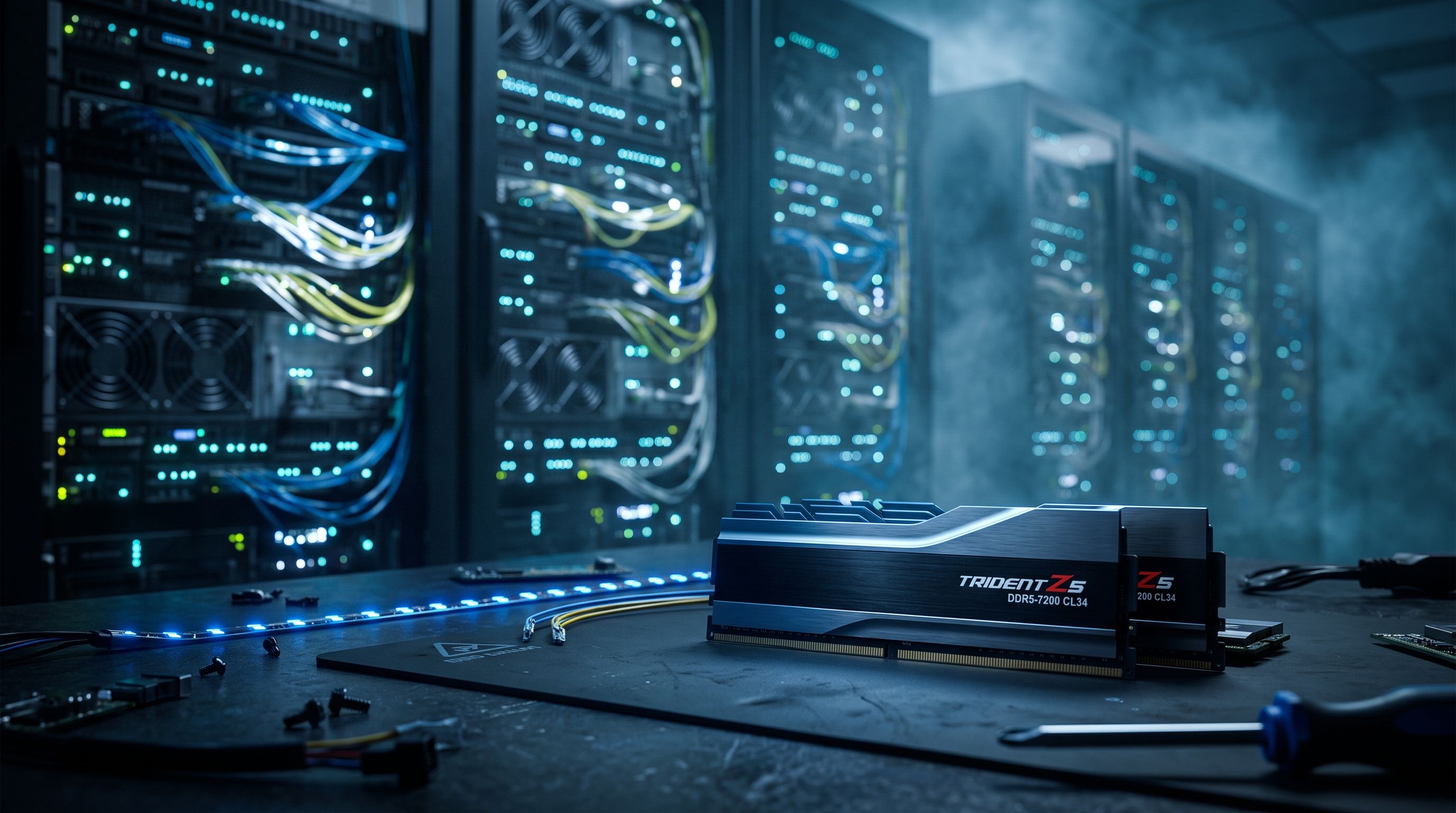
The global semiconductor memory market is experiencing an unprecedented structural pivot. For decades, consumer PC builders benefited from predictable memory cycles: periodic supply surpluses drove high-performance DDR4 and DDR5 kit prices down to historical lows. Today, the explosive expansion of hyperscale artificial intelligence data centers has broken that cycle, triggering a reallocation of silicon wafer cleanrooms that industry analysts have dubbed 'Ramageddon.'
1. The Physical Wafer Trade-Off: Through-Silicon Vias (TSVs) vs. Planar DRAM
To understand why AI server demand restricts desktop PC memory, one must examine the physical physics of modern memory fabrication. High Bandwidth Memory (HBM3e and HBM4) used in accelerators like the Nvidia H200 and Blackwell B200 is fundamentally different from conventional planar DDR5 DRAM.
- Vertical Die Stacking Multiplier: Manufacturing a single HBM module requires vertically stacking 8 to 12 individual DRAM dies interconnected by tens of thousands of microscopic Through-Silicon Vias (TSVs). A single microscopic defect in any individual layer ruins the entire 12-die stack. Consequently, manufacturing HBM consumes approximately three times as many 300mm wafer starts as producing an equivalent capacity of standard desktop DDR5.
- Foundry Cleanroom Reallocation: The world's primary memory manufacturers—SK Hynix, Samsung Electronics, and Micron Technology—have redirected substantial portions of their leading-edge lithography lines away from consumer desktop memory modules to fulfill lucrative enterprise HBM contracts that command gross margins above 60%.
2. Comparative Memory Foundry Allocation Matrix
- Enterprise HBM3e / HBM4: Primary cleanroom priority (~45% of advanced lithography capacity). High gross margins ($20+ per GB).
- Server DDR5 RDIMMs: Secondary priority (~30% capacity). Strong enterprise cloud server demand.
- Consumer Desktop DDR5: Constrained allocation (~15% capacity). Tighter retail supply margins.
- Consumer GDDR6 / GDDR7: Tightly budgeted allocation (~10% capacity). Directly limits retail GPU production volumes.
3. The Impact on Consumer Graphics & GDDR7
This memory squeeze extends far beyond system RAM modules; it directly throttles consumer graphics cards.
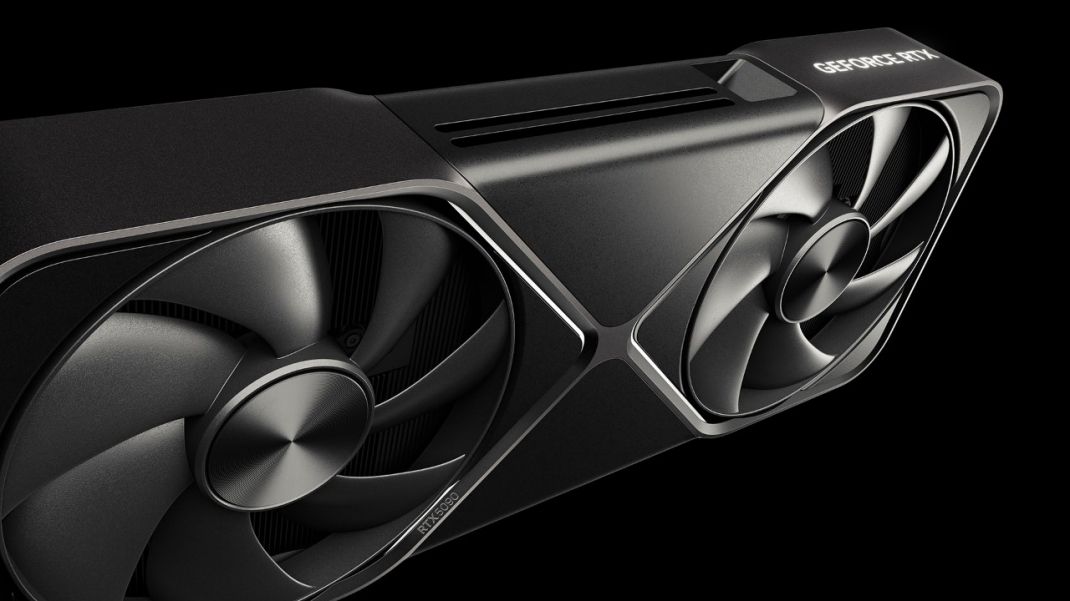
As detailed in our live Nvidia RTX 50-Series Supply & Spec Tracker, the tight availability of next-generation GDDR7 memory modules is a primary factor dictating retail GPU allocations for 2026 and 2027. Graphics card manufacturers are forced to compete for memory packaging slots, preventing 16GB from easily becoming the baseline on budget graphics cards.
4. DDR5 Speed and Latency Sweet Spots for Builders
With memory pricing remaining elevated, builders must avoid overspending on marketing gimmicks and focus strictly on platform sweet spots:
- AMD Socket AM5 Sweet Spot: For AMD Ryzen 7000, 8000, and 9000 processors, DDR5-6000 with CL30 timings remains the gold standard. Running memory at 6000 MT/s allows the internal memory controller (UCLK) to run in a 1:1 ratio with the memory clock (MCLK). Pushing to DDR5-7200 forces the memory controller into a 1:2 divider, increasing memory latency by 8ns to 12ns and degrading gaming framerates.
- Intel LGA1700 / LGA1851 Platforms: Intel's memory controllers handle higher frequencies gracefully in Gear 2 mode. Target DDR5-6400 to DDR5-6800 CL32 for optimal bandwidth without stability issues on four-DIMM motherboards.
5. Strategic Guidance for PC Builders
- Lock In High-Quality DDR5 Kits Early: If building an AM5 or modern Intel gaming rig, secure a vetted 32GB (2x16GB) DDR5-6000 CL30 kit rather than waiting for speculative price drops that may not materialize.
- Avoid Over-Allocating Memory Tiers: For dedicated gaming systems, 32GB remains the absolute sweet spot. Upgrading to 64GB or 128GB yields zero gaming framerate advantage while incurring a substantial financial penalty during periods of elevated memory pricing.
Enterprise Server DRAM vs. Consumer Channel Priorities
Beyond raw HBM3e demand, hyperscale cloud providers (including Microsoft Azure, AWS, and Google Cloud) are purchasing historic volumes of high-capacity DDR5 Registered ECC modules (RDIMMs) for server host systems.
- 64GB and 128GB Die Prioritization: Foundries prioritize manufacturing high-density 24Gb and 32Gb DRAM dies for enterprise server sticks where profit margins are highest, restricting the volume of standard 16Gb dies allocated to budget consumer desktop kits.
- Consumer Market Consequences: This structural bias ensures that high-speed consumer memory kits will maintain a firm price floor through 2027.