
Apple's Touchscreen MacBook Pro With PROLED XDR: Specs, Prices and Who Should Wait
Apple's first touchscreen Mac pairs a tandem OLED display with M5 Pro and M5 Max from $2,899. What's confirmed, and how it compares to the $1,999 M6 model.
Two new MacBook Pros in two days
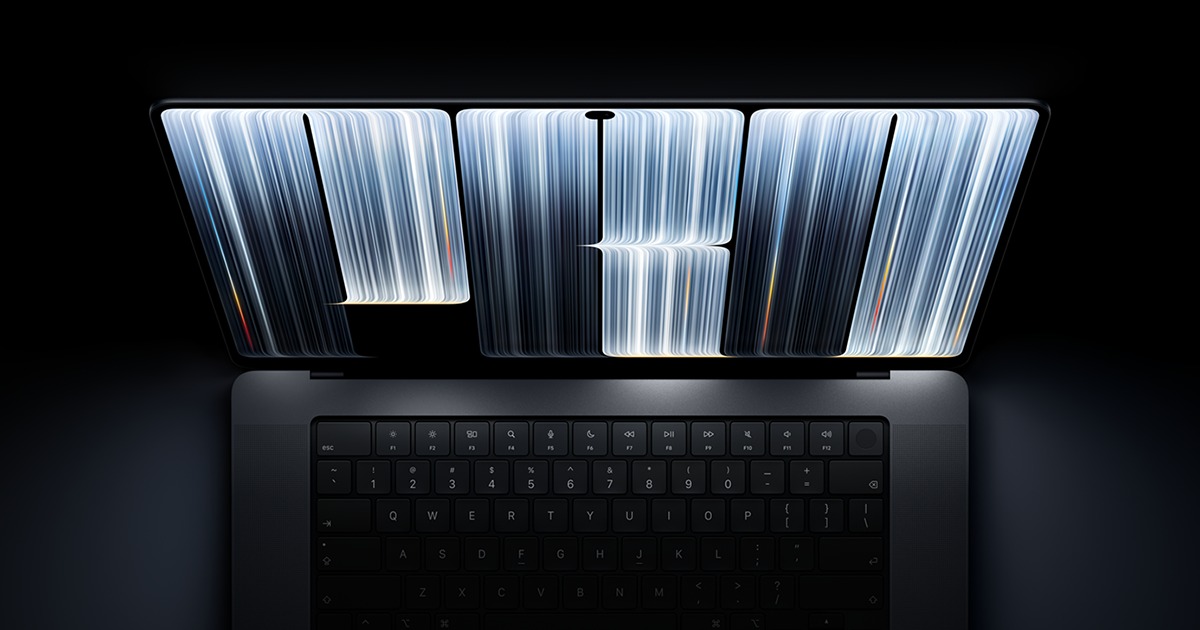
Apple launched two different MacBook Pros this week, and they're easy to mix up. On October 27 it announced a 14-inch MacBook Pro with M6, a chip upgrade that keeps the existing mini-LED design. On October 28 it announced the redesigned MacBook Pro with PROLED XDR Display in 14- and 16-inch sizes.
The touchscreen model is the headline, so most of this article is about it. I keep the M6 model in the comparison because it's the obvious cheaper alternative.
The display and touch
Apple calls the new panel PROLED XDR. It's a tandem OLED, meaning two light-emitting layers stacked together. Apple says that design helps with brightness and uniformity. Apple's official figures (Confirmed):
- Up to 2000 nits peak brightness for both SDR and HDR content
- 10,000,000:1 contrast ratio
- Adaptive refresh from 10Hz to 120Hz
- P3 and Adobe RGB color, with more than 80 percent Rec. 2020 coverage
- Optional nano-texture glass to cut glare
The touch sensor sits inside the display panel rather than on top of it, which Apple says lowers latency. Apple also says a new hinge keeps the screen steadier when you tap it. macOS turns taps into clicks, so many existing apps should respond to touch without updates. Apple names apps such as Microsoft Office, Adobe Lightroom, DaVinci Resolve and Blender as getting touch support, but its footnote says those apps arrive "later this year."
The notch is gone. In its place is a Dynamic Island that holds Spotlight, Live Activities and Siri AI. Apple's footnote says Spotlight only moves there when Siri AI is available and turned on.
Design, chips and ports
Apple says the 14-inch model now weighs 3 pounds and the 16-inch weighs 4 pounds, which it describes as 0.5 and 0.7 pounds lighter than before. It gave thickness only as relative figures: about half a millimeter thinner for the 14-inch and nearly a millimeter for the 16-inch.
The chips are carried over from March. That matters if you already own an M5 Pro or M5 Max MacBook Pro, because raw chip speed is the same. Storage now goes up to 16TB and memory up to 128GB.
Spec comparison (as of October 29, 2026)
All figures below are Confirmed from Apple's two press releases.
| Spec | 14-inch PROLED XDR | 16-inch PROLED XDR | 14-inch with M6 |
|---|---|---|---|
| Display | 14.2-inch tandem OLED, touch | 16.3-inch tandem OLED, touch | Liquid Retina XDR (mini-LED), no touch |
| Peak brightness | 2000 nits SDR and HDR | 2000 nits SDR and HDR | 1600 nits HDR |
| Contrast | 10,000,000:1 | 10,000,000:1 | 1,000,000:1 |
| Chip | M5 Pro or M5 Max | M5 Pro or M5 Max | M6 (12-core CPU, 12-core GPU) |
| Max memory | 128GB | 128GB | 32GB |
| Max storage | 16TB | 16TB | 4TB |
| Ports | 3x Thunderbolt 5, HDMI, SDXC, MagSafe, headphone | Same | 3x Thunderbolt 4, HDMI, SDXC, MagSafe 3, headphone |
| External displays | Up to 3 (M5 Pro) or 4 (M5 Max) | Up to 3 or 4 | Up to 2 |
| Weight | 3 lb | 4 lb | Not stated in release |
| Battery (Apple claim) | Up to 24 hours | Up to 24 hours | Up to 24 hours |
| US starting price | $2,899 | $3,399 | $1,999 |
Apple's battery figure is "up to 24 hours" for the touchscreen line overall. The press release doesn't split it by size, and battery life always varies with use.
What outlets are reporting
- Reported (MacRumors): Apple has discontinued the earlier mini-LED MacBook Pro models with M5 Pro and M5 Max (MacRumors). I haven't seen Apple state this directly.
- Reported (MacRumors, citing Apple's specs page): The base 16GB M6 model keeps 153GB/s memory bandwidth. Only the 24GB and 32GB versions get the 170GB/s figure Apple advertises (MacRumors).
- Note on dates: TechCrunch wrote that touchscreen pre-orders open October 30 (TechCrunch). Apple's release says October 28, so I use Apple's date.
- Note on prices: Gizmodo listed the 14-inch M5 Max at $4,449 (Gizmodo). Apple's release says $4,499, so I use Apple's figure.
My math: what each step up costs
The biggest single jump in the lineup is going from the M6 model to the touchscreen model: $900. Below are Apple's US starting prices as of October 29, 2026, with my own arithmetic for each step. Prices outside the US will differ, so check Apple's store for your country.
| Model (starting config) | US price | Step from row above (my arithmetic) | US education price | Education saving (my arithmetic) |
|---|---|---|---|---|
| 14-inch, M6 | $1,999 | — | $1,899 | $100 |
| 14-inch PROLED XDR, M5 Pro | $2,899 | +$900 (900 ÷ 1,999 = 45% more) | $2,749 | $150 |
| 16-inch PROLED XDR, M5 Pro | $3,399 | +$500 | $3,199 | $200 |
| 14-inch PROLED XDR, M5 Max | $4,499 | +$1,100 | $4,199 | $300 |
| 16-inch PROLED XDR, M5 Max | $4,799 | +$300 | $4,499 | $300 |
Two things stand out to me from this table.
First, moving from M5 Pro to M5 Max costs $1,600 on the 14-inch (4,499 − 2,899) but $1,400 on the 16-inch (4,799 − 3,399). So the bigger screen gets cheaper to add once you pick the Max: $500 extra at M5 Pro, but only $300 at M5 Max.
Second, Apple's press release doesn't list the memory and storage of these starting configurations for the touchscreen models. So the $900 gap to the M6 model may not compare like for like. I'd check Apple's configurator before treating it as an exact upgrade cost.
Decision rules I'd use
- You never touch your screen and don't edit HDR video or print photos. Look at the $1,999 M6 model first. Apple claims its GPU is up to 30 percent faster than the M5 it replaces. That's Apple's own testing, not independent results.
- You need more than 32GB of memory, Thunderbolt 5, or three or more external displays. Among the new models, only the touchscreen MacBook Pro offers these. The M6 model tops out at 32GB and two external displays.
- You already own an M5 Pro or M5 Max MacBook Pro from March. The chip is identical, so you'd be paying for the display, touch, the Dynamic Island and lower weight. That can still be worth it for a colorist, but it's not a speed upgrade.
- You're buying the M6 model to run local AI models. Per MacRumors' reading of Apple's specs page, only the 24GB and 32GB versions get the higher 170GB/s bandwidth. I'd skip the 16GB base config for that use.
- You're unsure. Wait for independent reviews after November 6. Nobody outside Apple has published battery tests, touch latency measurements or OLED brightness readings yet.
What we still don't know
- Real battery life. Apple's "up to 24 hours" comes from its own September 2026 testing. It isn't broken out by screen size or chip.
- OLED longevity. Apple says its display engine tracks pixel use over time to protect image quality. How well that holds up over years of static desktop use is something only long-term testing will show.
- How good touch feels. Apple describes it as very responsive, but no independent outlet has measured latency or tested palm rejection yet.
- Third-party app support. Apple's footnote says the named touch-optimized apps arrive later this year, so day-one support may be limited.
- Which countries get it first. Apple lists 30 countries and regions for the touchscreen model and 35 for the M6 model, but its releases don't name them all. Local pricing outside the US isn't in the releases.
- Starting configurations. The release doesn't list base memory and storage for the $2,899 and $3,399 models.
- What comes next. Bloomberg's Mark Gurman has reported that Apple skipped M6 Pro and M6 Max chips (Reported, as summarized by Macworld). Timing for M7 Pro and M7 Max MacBook Pros in late 2027 is Rumor. I wouldn't wait or buy based on either.