
ATX 3.1 vs. ATX 2.4: Understanding 12V-2x6 Connectors & Microsecond Transient Spikes
Detailed engineering breakdown of Intel's ATX 3.1 specification: how the revised 12V-2x6 connector resolves thermal safety issues, and why 200% power excursion tolerances matter for modern GPUs.
Table of Contents (4 sections)›
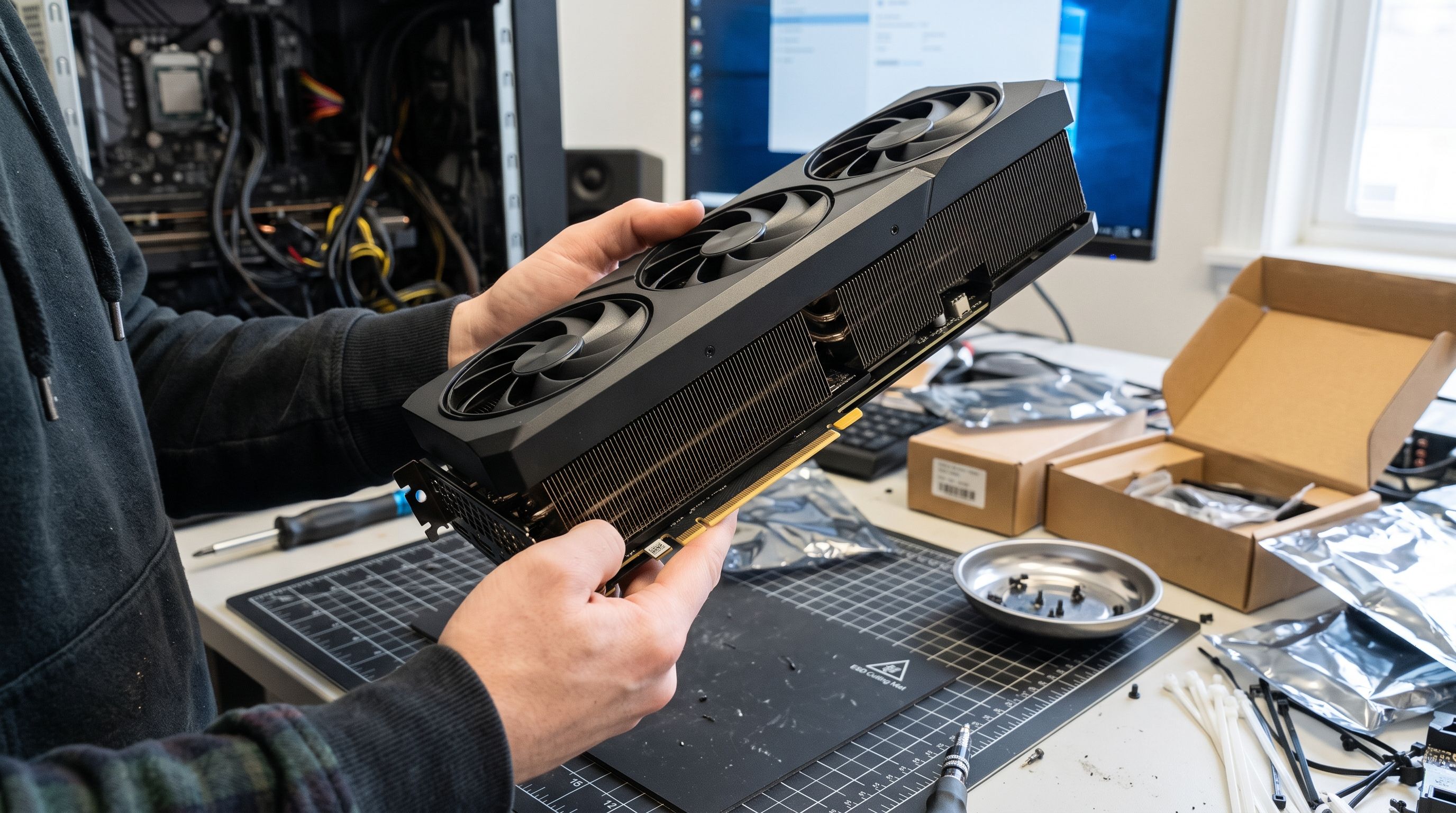
For over two decades, the ATX 2.x standard quietly governed desktop PC power delivery. A 750W power supply from 2015 was expected to power virtually any single-GPU gaming rig. However, the arrival of modern graphics architectures (Nvidia Ada Lovelace, Blackwell, and AMD RDNA 3/4) broke this historical assumption. Gamers began experiencing sudden, inexplicable system reboots despite their power supply wattage rating appearing more than adequate on paper.
The culprit was electrical transients: rapid, microsecond-duration power spikes where a graphics card abruptly doubles its power draw during intense ray tracing or compute loads. Intel's latest ATX 3.1 design specification was engineered specifically to solve this problem.
1. The Physics of Microsecond Transient Spikes
In modern GPUs, power consumption is not a flat line. Dynamic clock boosting algorithms (such as Nvidia GPU Boost) adjust voltage and frequencies thousands of times per second. When transitioning from a light load to a heavy volumetric lighting calculation, the GPU's voltage regulator modules (VRMs) pull immense current from the +12V rail in less than 100 microseconds (100μs).
- The ATX 2.4 Limitation: Legacy ATX 2.4 power supplies were designed under the assumption that loads would rarely exceed 110% to 120% of rated capacity. When a modern 450W GPU spikes to 800W for 100 microseconds, an older power supply's supervisory IC interprets this as a dead short-circuit and trips Over-Current Protection (OCP), shutting down your PC instantly.
- The ATX 3.1 Power Excursion Standard: Under ATX 3.1, a power supply must be engineered to withstand a 200% power excursion for 100μs. A compliant 850W ATX 3.1 unit is legally certified to absorb instantaneous spikes up to 1,700W without tripping protections or dropping voltage below safe tolerances.
2. 12V-2x6 vs. 12VHPWR: How the New Connector Fixes Thermal Risk
When high-power 16-pin connectors debuted with the RTX 4090 under the original 12VHPWR standard, isolated thermal melting incidents occurred. PCIe Special Interest Group (PCI-SIG) engineers investigated the root cause and redesigned the interface into the modern 12V-2x6 specification:
- Shortened Sense Pins (0.5mm Deeper): The 12V-2x6 standard shortens the four sideband sense pins (S1–S4) by 0.5mm while lengthening the power terminals. If the cable is not fully seated by even a fraction of a millimeter, the sense pins fail to make contact. The power supply detects the incomplete insertion and refuses to deliver high-wattage current, permanently eliminating the risk of partial-mating thermal meltdowns.
- Robust Terminal Plating: The 12 individual 12V power pins feature thicker spring-contact alloys rated for sustained 9.2A per pin, delivering up to 600W continuously with lower contact resistance.
3. ATX 3.1 vs. ATX 2.4 Comparison Matrix
- Transient Excursion Tolerance: ATX 3.1 = 200% rated load for 100μs | ATX 2.4 = ~110% to 120% max.
- Native High-Power Cable: ATX 3.1 = Native 12V-2x6 cable (no clumsy 3x 8-pin octopus adapters) | ATX 2.4 = Relies on multiple legacy 8-pin PCIe cables.
- Hold-Up Time Standard: ATX 3.1 standardizes hold-up time to 12ms at full load, aligning with modern Power Good (PWR_OK) signal timing.
- Standby Efficiency (ALPM): ATX 3.1 mandates >70% efficiency at ultra-low 10W loads, minimizing phantom wall draw when your PC idles.
4. Sizing Your System for Real-World Safety
Because ATX 3.1 units absorb transient spikes natively, PC builders no longer need to wildly over-purchase wattage simply to prevent OCP trips. An 850W ATX 3.1 power supply frequently provides superior real-world reliability than a legacy 1000W ATX 2.4 power supply when paired with a high-end graphics card.
To calculate the exact transient load requirements for your specific CPU and GPU combination, use our interactive Transient Power & PSU Sizer, which dynamically models sustained draw, 100μs spike headroom, and optimal 50%–70% efficiency curves.