
Back-Connect (BTF) Motherboards: Cable-Free Aesthetics vs. Real-World Case Compatibility
Analyzing the back-connect motherboard movement: evaluating ASUS BTF, MSI Project Zero, and Gigabyte Stealth standards, thermal performance, and chassis compatibility constraints.
Table of Contents (6 sections)›
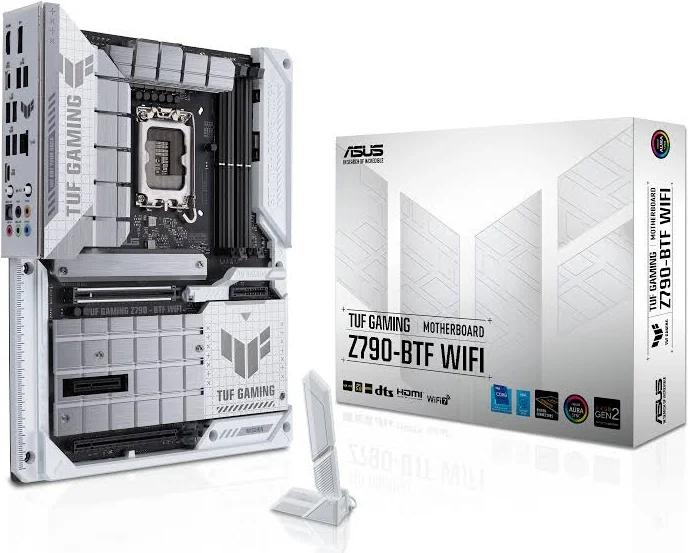
For decades, PC cable management has been an exercise in compromise. Even in meticulously planned builds, thick 24-pin ATX power cables, EPS 8-pin CPU cables, front-panel headers, and SATA connectors inevitably snake across the front of the motherboard tray, obscuring components and disrupting airflow. The back-connect motherboard movement—spearheaded by ASUS BTF (Back-To-the-Future), MSI Project Zero, and Gigabyte Stealth—promises to eliminate this clutter entirely.
1. What Is Back-Connect (BTF) Technology?
The concept is elegantly simple: relocate all power headers, fan headers, USB headers, and front-panel pins to the reverse side of the printed circuit board (PCB).
- A Completely Clean Main Chamber: Inside the front glass chamber, only the CPU cooler, RAM sticks, and graphics card remain visible. All cables plug directly into the rear tray behind the motherboard backplate.
- High-Power Graphics Card Slots (BTF GC): Advanced variants feature a specialized high-power PCIe slot capable of delivering up to 600W directly to compatible GPUs, completely eliminating the bulky 12V-2x6 power cable from the front view.
2. The Engineering Behind the 600W GC-HPWR Slot
Eliminating the GPU power cable is the crowning achievement of the BTF standard. Traditional PCIe slots deliver a maximum of 75W through motherboard traces. High-power graphics cards require 300W to 450W of continuous power.
- The High-Power Goldfinger Connector: ASUS BTF-GC motherboards implement an inline high-power connector directly behind the primary PCIe x16 slot. A compatible graphics card features an extended PCB tab that plugs directly into this power rail.
- Motherboard Trace Safety: To safely route 600W through the motherboard without creating thermal hot spots, BTF boards utilize 2-ounce copper power planes and dedicated 12V-2x6 inputs located on the rear of the motherboard, isolating heavy currents from sensitive memory and audio traces.
3. The Compatibility Reality: The Chassis Hurdle
While visually stunning, BTF motherboards cannot be installed in standard PC cases. Because all connectors protrude from the back of the PCB, the case tray requires precise, laser-cut relief cutouts corresponding to header positions.
Verified BTF-Compatible Cases (October 2026)
- Corsair 2500 & 6500 Series: Dual-chamber micro-ATX and ATX chassis featuring factory-engineered cutouts for both ASUS BTF and MSI Project Zero motherboards.
- Lian Li O11 Vision Compact: Showcase dual-glass chassis with dedicated reverse-connector cutouts and 28mm rear cable management depth.
- ASUS TUF Gaming GT302 ARGB: Designed specifically for ASUS BTF motherboards with wide pass-through grommets.
- Fractal Design North XL (BTF Editions): Minimalist wood-accent chassis offering selected back-connect motherboard tray revisions.
4. Assembly Sequence & Maintenance Ergonomics
Building a back-connect PC requires a different mental model than traditional builds:
- Pre-Installation Checklist: You must install the CPU cooler mounting bracket, RAM modules, and primary M.2 NVMe drives before dropping the motherboard into the case. Reaching rear-facing headers requires removing both side panels.
- Rear Cable Clearance Requirement: Thick 24-pin ATX power cables require at least 25mm to 30mm of clearance between the motherboard tray and the rear panel. Choosing a case with insufficient rear depth will result in bulging panels or damaged connector clips.
5. The Verdict: Is BTF Ready for Your Next Build?
Back-connect motherboards represent the most significant aesthetic evolution in PC building in a decade. If you are building a new PC from scratch with a compatible case and want a pristine showcase aesthetic, BTF is an outstanding choice. However, for builders upgrading existing systems, standard ATX motherboards remain the more practical and flexible path.
Power Supply Cable Flexibility and Custom Extension Realities
Because all power connectors face the back of the case in a BTF build, cable flexibility becomes a major factor during assembly.
- Stiff Factory Ribbon Cables: Many standard power supplies ship with stiff, heat-shrunk ribbon cables that resist tight 90-degree bends in rear cable channels. Choosing a power supply with individually sleeved, ultra-flexible embossed cables (such as Corsair Type 5 or Seasonic Vertex) makes rear routing substantially cleaner.
- Front-Panel Header Access: Modern BTF motherboards combine front-panel power, reset, and HDD activity pins into a unified front-panel block, eliminating the tedious process of connecting individual single-pin headers in tight spaces.