
Input Automation vs. Fair Play: The Battle Over Hardware Macros in Competitive Gaming
Investigating the rise of automated turn buttons, SOCD resolution, and firmware-level macros: where hardware innovation ends and competitive disqualification begins.
Table of Contents (6 sections)›
Competitive PC gaming has reached an unprecedented technological crossroads. For decades, the boundary between player skill and hardware assistance was clear: hardware sensors tracked physical input, while game software decided the outcome. Today, the introduction of automated firmware macros, rapid trigger switches, and Simultaneous Opposite Cardinal Direction (SOCD) resolution tools has blurred that boundary, triggering major tournament bans and developer crackdowns.
1. The Rise of Directional Turn Macros and Automated Inputs
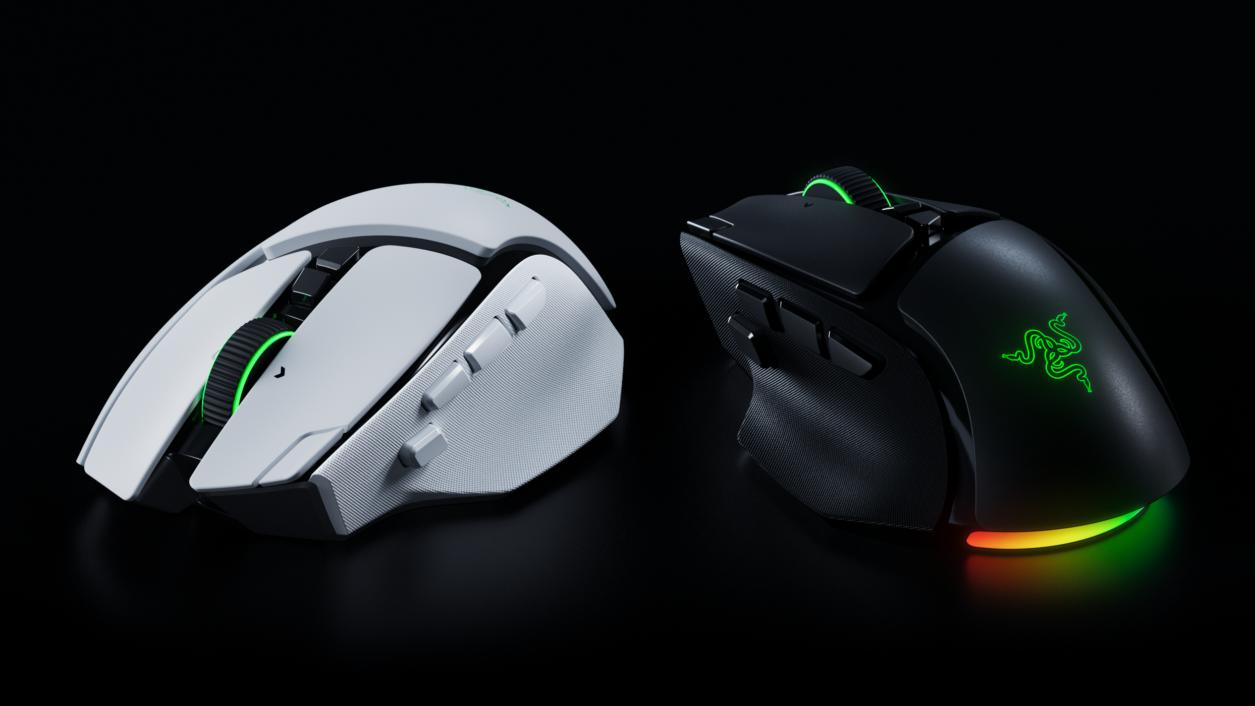
The controversy reached boiling point when peripheral manufacturers began advertising dedicated quick-turn buttons and automated directional macros embedded directly into peripheral companion software and onboard memory. A single keystroke or thumb button could instantly execute a perfect, frame-accurate 180-degree turn in tactical first-person shooters.
In fast-paced tactical games like Counter-Strike 2, Valorant, and Apex Legends, crosshair placement and physical mouse repositioning are core mechanical skills. Automating a 180-degree turn via software eliminates the risk of mouse pad overrun and eliminates the physical latency of resetting the mouse sensor.
2. The Physics of Analog Hall Effect Switches & Rapid Trigger
To understand how hardware assistance evolved, one must look at analog keyboards pioneered by Wooting and adopted across the industry. Traditional mechanical switches actuate at a fixed physical point (typically 1.5mm to 2.0mm) and must reset above that point before registering another keypress.
- Hall Effect Sensor Operation: Hall Effect switches use a permanent magnet and an internal sensor that continuously measures magnetic flux. Instead of a binary on/off switch, the keyboard micro-controller tracks the exact millimeter position of every key.
- Rapid Trigger Technology: With Rapid Trigger, a key resets the microsecond it moves upward by as little as 0.1mm, enabling near-instantaneous key re-presses. This pure physical responsiveness gives players faster strafing without altering game rules.
3. SOCD and Snap Tap: Where Hardware Crossed the Line
The controversy escalated when manufacturers introduced firmware-level SOCD resolution (branded as Snap Tap or Rappy Snappy). In tactical shooters, counter-strafing requires releasing the 'A' key before pressing 'D' to bring player velocity to zero for accurate shooting.
- Last-Input Priority (Snap Tap): When both 'A' and 'D' are held simultaneously, the firmware automatically cancels the first key and prioritizes the newest key. This allows players to achieve mathematically perfect counter-strafes without the physical timing coordination previously required.
- The Developer Backlash: In August 2024, Valve released a mandatory Counter-Strike 2 competitive update officially outlawing automated counter-strafing (Snap Tap / Rappy Snappy) and scripted turning macros. Players utilizing automated hardware assists are now kicked from official Premier matchmaking servers.
- Tournament Organizer Consensus: Major esports organizations, including ESL and BLAST, updated their rulebooks to categorize automated multi-input or firmware-resolved scripts as unauthorized third-party automation, regardless of whether the software runs on the host PC or inside onboard mouse microcontroller firmware.
4. Hardware Innovation vs. Software Paywalls
The broader debate concerns whether peripheral makers should be gating software macros behind premium price tags. Pure hardware innovations—such as optical switches, 8,000Hz polling rates, and sub-0.2mm Hall Effect rapid triggers—provide genuine physical responsiveness without altering game inputs. In contrast, artificial macro assists disguised as hardware features risk alienating competitive players and inviting game-wide anti-cheat bans.
5. What Competitive Gamers Need to Know
- Check Game-Specific EULAs: Always verify tournament and anti-cheat policies before enabling advanced firmware features like SOCD or automated turn bindings.
- Prioritize Physical Performance: Focus on sensor tracking accuracy, mouse shape, weight distribution, and low click latency rather than automated macro features that can trigger anti-cheat kicks.
Sub-Tick Packet Inspection and Server-Side Detection
Game developers are responding to input automation by deploying advanced sub-tick telemetry inspection on competitive servers.
- Algorithmic Cadence Analysis: Human reaction time and finger release mechanics always exhibit slight physical variance (typically 10ms to 40ms of overlapping travel). Firmware-resolved SOCD (Snap Tap) exhibits zero milliseconds of overlapping input, producing identical mathematical delta timestamps that server-side telemetry immediately flags.
- The Future of Fair Play Certification: Expect major esports leagues to mandate peripheral firmware whitelists and disable on-the-fly macro switching modes during sanctioned tournament play.