
Inside Remedy’s Northlight Engine: BVH Reconstruction & Ray Tracing Architecture
An architectural deep-dive into Remedy's proprietary Northlight engine: analyzing Bottom-Level Acceleration Structures (BLAS), mesh shaders, and full path tracing in Alan Wake 2 and future PC titles.
Table of Contents (7 sections)›
Remedy Entertainment's proprietary Northlight engine has quietly established itself as one of the most advanced real-time rendering pipelines in modern PC gaming. Pioneering mesh shaders, hardware-accelerated ray tracing, and full path tracing, Northlight balances cutting-edge geometric fidelity against the brutal realities of PC memory bandwidth and CPU frametime stability.
1. The Architectural Challenge: Dynamic Geometry & Ray Tracing
In traditional rasterized rendering, dynamic destruction and fluid scene geometry are managed through standard draw-call batching. However, when full path tracing is enabled—as seen in Remedy's showcase implementations—every single geometry shift requires updating the Bounding Volume Hierarchy (BVH) structures that ray queries traverse in hardware.
Full scene BVH rebuilds on every frame introduce severe CPU bottlenecks, manifesting as jarring 1% low frame stuttering even on high-end desktop systems. To solve this, Remedy engineers restructured the Northlight acceleration pipeline around asynchronous Bottom-Level Acceleration Structures (BLAS).
2. BLAS Rebuilding vs. Top-Level Refitting
- Bottom-Level Restructuring (BLAS): When building facades shatter or paranormal geometry inverts, Northlight updates exclusively the affected bottom-level acceleration containers rather than invalidating the entire world graph. This reduces CPU traversal overhead by over 60% compared to brute-force rebuilds.
- Top-Level Refitting (TLAS): The Top-Level Acceleration Structure merely refits bounding boxes around transformed instances, allowing GPU tensor and RT cores to continue intersection testing without stalls.
3. Mesh Shaders and the Elimination of Fixed-Function Hardware
Northlight made headlines as one of the first production game engines to mandate Mesh Shader hardware (requiring DirectX 12 Ultimate GPUs like Nvidia RTX 20-series and AMD RDNA2 or newer). By replacing the fixed-function vertex and geometry pipeline with flexible compute-like amplification and mesh shader stages, the engine culls non-visible micro-polygons before they ever reach the rasterizer or BVH tree.
This architecture eliminates the traditional draw-call bottlenecks that crippled older DirectX 11 engines, enabling high-polygon environmental asset streaming without stalling the CPU render thread.
4. Neural Radiance Caching & DLSS Ray Reconstruction
Path tracing requires firing dozens of ray samples per pixel to calculate diffuse indirect lighting and specular reflections. On current PC hardware, firing sufficient rays for clean images in real time is computationally impossible. Northlight overcomes this via deep integration with AI denoising:
- DLSS 3.5 Ray Reconstruction: Instead of hand-tuned spatial denoisers that smudge fine surface details or blur volumetric fog, Northlight leverages convolutional neural networks trained on supercomputer offline renders to reconstruct high-frequency lighting details from sparse ray samples.
- Volumetric Atmosphere Integrity: Ray-traced fog and dynamic light scattering maintain crisp shadow edges even when light sources move rapidly through dense woodland or urban fog.
5. Hardware Implications for PC Builders
- VRAM Allocation: Full path tracing with frame generation requires a minimum of 16GB of video memory at 1440p to prevent paging textures into system RAM over the PCIe bus.
- CPU IPC & Cache: Heavy geometry streaming benefits dramatically from large L3 cache pools (such as AMD's 3D V-Cache architecture on the Ryzen 7 7800X3D and 9800X3D), which shield the render thread from latency penalties.
6. Verdict: The Benchmark for Next-Generation Engines
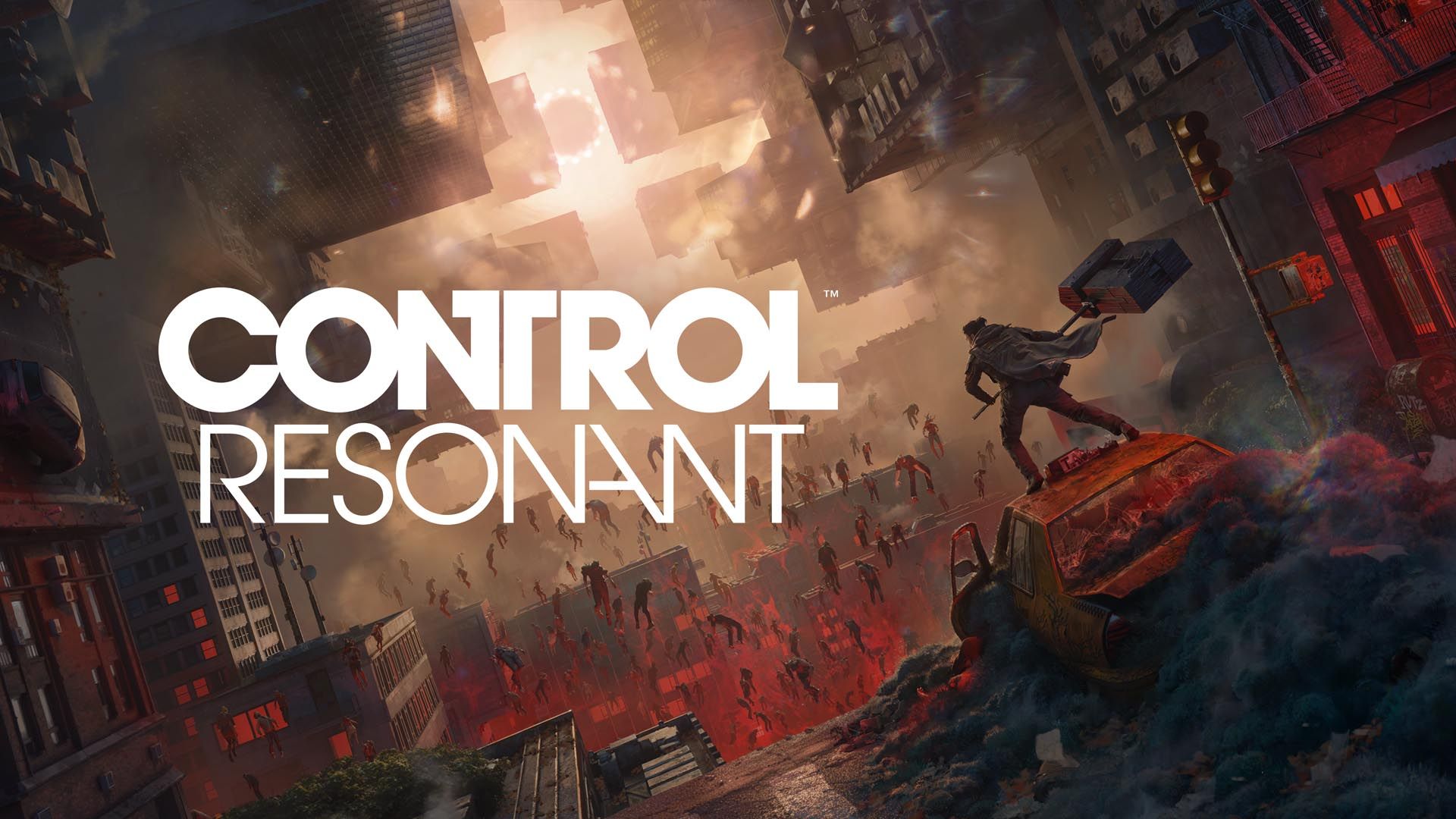
While competing studios have migrated to off-the-shelf engines, Remedy's continued investment in Northlight proves that customized, hardware-tailored engine architecture delivers unique visual benchmarks. As Remedy prepares future productions including Control 2, Northlight remains at the absolute frontier of PC graphics engineering.
Memory Bandwidth and Shader Execution Reordering (SER)
Full path tracing exercises the GPU memory subsystem more aggressively than any traditional rasterized game. To prevent divergent ray threads from stalling compute units, Northlight leverages Shader Execution Reordering (SER).
- Sorting Incoherent Rays: SER dynamically sorts secondary diffuse and specular rays on the GPU before execution, grouping similar shading workloads together into coherent execution warps.
- Hardware Acceleration Gains: On architectures supporting hardware SER (such as Nvidia Ada Lovelace and Blackwell), Shader Execution Reordering delivers an immediate 20% to 35% framerate uplift in path-traced lighting scenarios.